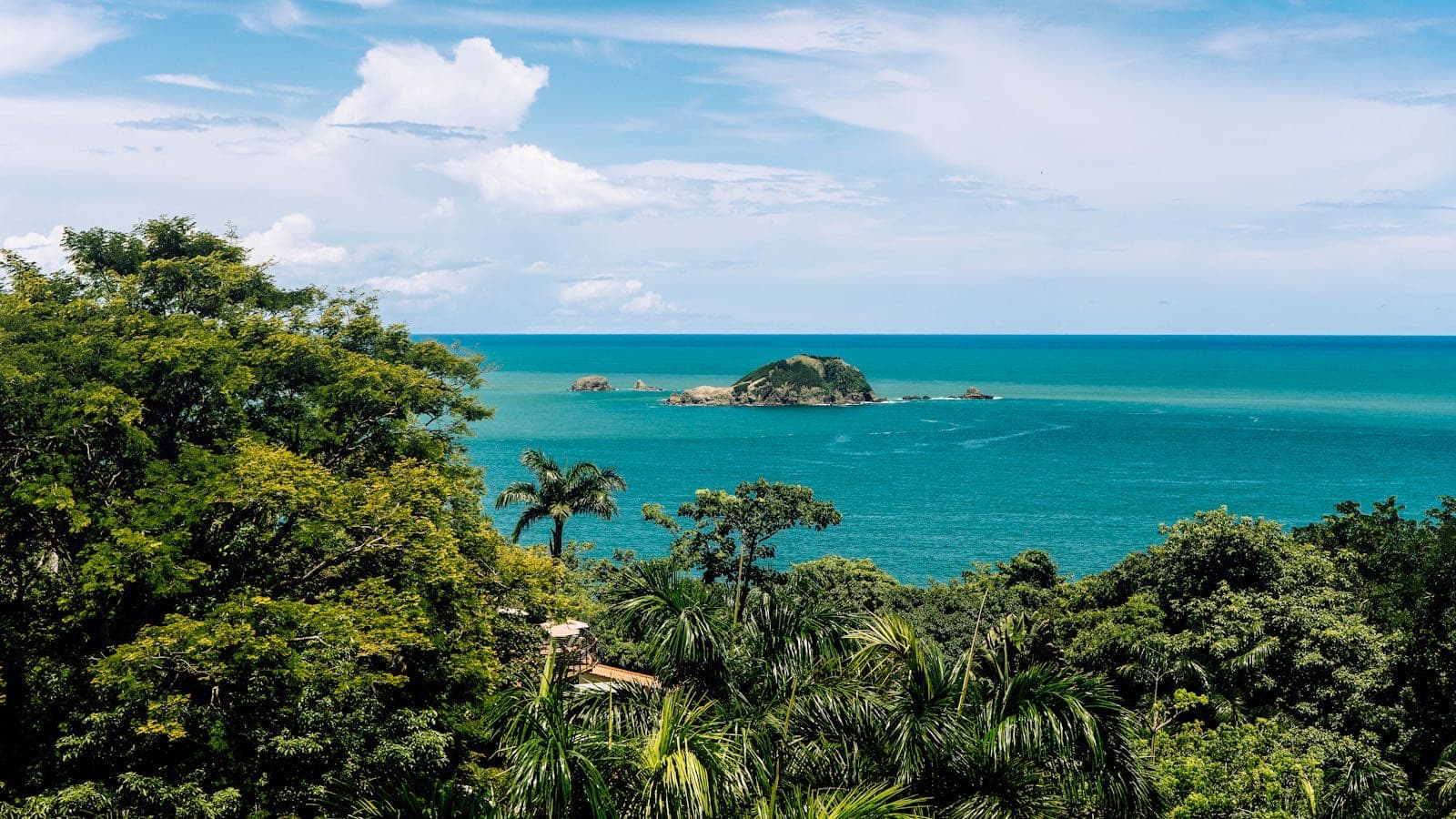
I'm Costa Rican. I live in La Fortuna and run a shuttle company. So this comparison is biased — you should know that up front. But I've also been to Mexico many times (Cancún, Tulum, Mexico City, Oaxaca, Puerto Vallarta) and I have Mexican friends, suppliers, and colleagues. I'll try to be fair.
The honest answer to "should I go to Costa Rica or Mexico?" is: it depends what you want from the trip. They are very different countries that get lumped together because both are warm and Spanish-speaking. Let's go category by category.
Quick verdict up top
- Pick Costa Rica if you want: pure nature, wildlife, jungle, the safest country in Central America, small distances, no crime stress, smaller crowds, eco-tourism.
- Pick Mexico if you want: deep culture, ancient history, world-class food, all-inclusive resorts, cheaper prices, more flight options, beach nightlife.
If you only have one week and you've never been to either, my honest take: Costa Rica is the easier first trip. It's smaller, safer, and more "natural." Mexico is the deeper trip you take after.
Safety
Costa Rica's homicide rate is roughly one-fifth of Mexico's nationally. We have no cartel presence, no organized crime targeting tourists, and almost no kidnapping risk. Petty theft (phones, bags from the beach) does happen, especially in San José and at some bus terminals, but it's the same level of caution you'd take in Lisbon or Barcelona.
Mexico is much more varied. Cancún, the Riviera Maya, San Miguel de Allende, Mérida, Oaxaca, and Mexico City's central neighborhoods are objectively safe for tourists, with millions of visitors a year and no issues. But Mexico also has regions (Sinaloa, Tamaulipas, Michoacán, parts of Guerrero) where the US State Department issues "do not travel" warnings — that's a different category of risk than anywhere in Costa Rica.
Mexico's tourist zones are safe when you stay in the tourist zones. Costa Rica is safe pretty much everywhere a tourist would go.
Edge: Costa Rica, clearly, if peace of mind is a priority.
Cost
This is where Mexico has a real advantage. Costa Rica is the most expensive country in Central America — and the gap has widened in the last 5 years.
Rough comparisons for a mid-range traveler:
- Hotel (mid-range, decent location): $120–180/night in Costa Rica vs $70–130 in Mexico.
- Sit-down dinner for two with drinks: $50–70 in CR vs $30–50 in Mexico.
- Domestic flights: Mexico is cheaper and has 4x more routes. Costa Rica has limited domestic options (mostly SANSA from SJO).
- All-inclusive resorts: Mexico is the king of this category. CR has very few true all-inclusives.
- Activities: Tours and national park entries are similar ($15–25 entry, $50–100 for guided tours).
If you're on a tight budget, Mexico stretches further. Costa Rica is closer to Caribbean island prices than to Central American averages. Our prices reflect the fact that the country is small and tourism-dependent — supply is limited.
Edge: Mexico.
Food
This isn't close. Mexican food is one of the great world cuisines. UNESCO put it on the Intangible Cultural Heritage list for a reason. Mexico City alone has more variety in three blocks than all of Costa Rica.
Costa Rican food (Tico food) is comfort food, not destination food. Gallo pinto (rice and beans), casados (rice, beans, plantain, salad, protein), arroz con pollo, ceviche, tamales at Christmas. It's good, fresh, and homey — and there are great restaurants here — but no one travels to Costa Rica for the food itself.
Where Costa Rica wins: fresh fruit (mango, papaya, pineapple, watermelon, guanábana, all locally grown and ripe), coffee (we grow some of the best in the world — try a farm tour), and seafood at coastal towns (whole fried snapper at a Pacific beach is incredible).
But if "I want to eat like crazy" is a priority — go to Mexico.
Edge: Mexico, by a wide margin.
Nature, wildlife, biodiversity
Here's where Costa Rica isn't just better — it's in a different league.
Costa Rica covers 0.03% of the Earth's land surface but contains 6% of the world's biodiversity. National parks make up 25% of the country. Within a 4-hour drive of San José you can see:
- Active volcano (Arenal)
- Cloud forest (Monteverde)
- Pacific rainforest (Manuel Antonio)
- Caribbean coast and reef (Cahuita)
- Mangroves, sloth sanctuaries, hummingbird gardens, monkey troops, scarlet macaws, sea turtles nesting, and humpback whales
Mexico has incredible nature too — Sian Ka'an, Copper Canyon, Sumidero, the cenotes of the Yucatán — but the density of nature per square kilometer is unmatched in Costa Rica. You don't have to make special pilgrimages here. You see toucans from the breakfast buffet at decent hotels.
If you want to see wildlife, Costa Rica wins. If you want to see landscapes (deserts, canyons, colonial highlands), Mexico has more variety.
Edge: Costa Rica for wildlife, biodiversity, and small-distance variety. Mexico for landscape diversity.
Beaches
Mexico's Caribbean coast (Cancún, Tulum, Playa del Carmen, Cozumel, Holbox) has the best beaches in the western hemisphere, full stop. Powder-white sand, baby-blue water, calm swimming, world-class snorkeling. The Pacific side (Puerto Vallarta, Sayulita, Zihuatanejo, Oaxaca coast) is more rugged and surfy.
Costa Rica's Pacific beaches range from "very good" to "world-class" — Manuel Antonio, Conchal, Tamarindo, Santa Teresa, Uvita. The Caribbean side (Puerto Viejo, Cahuita) is gorgeous but smaller-scale than the Mexican Caribbean.
Here's the honest version: Mexico's Caribbean beaches are prettier than Costa Rica's Pacific beaches. That's just true. But Costa Rica's beaches come with monkeys in the trees, jungle behind the sand, and no high-rise development. It's a different feel.
If your trip is mostly beach + relaxation, Mexico's Caribbean has the edge. If beach is part of a broader nature trip, Costa Rica is more interesting. See our best beaches in Costa Rica guide for the full ranking.
Edge: Mexico for the Caribbean's powder-sand beaches. Costa Rica for jungle-meets-beach scenery.
Ease of travel
Costa Rica is small (about the size of West Virginia). You can see 3–4 totally different ecosystems in one week without flying. The shuttle from SJO to La Fortuna is 3 hours. La Fortuna to Manuel Antonio is 4 hours. Liberia to Tamarindo is 1 hour. Distances are manageable.
Mexico is huge (about 18x the size of Costa Rica). Cancún to Mexico City is a 2.5-hour flight. Mexico City to Oaxaca is another hour. To see "Mexico" properly you have to fly a lot, or pick one region and stay there.
For a first-time, can't-go-wrong trip, Costa Rica is easier:
- Two international airports (SJO, LIR) — both small, easy to navigate.
- Driving distances are short.
- One time zone.
- Tap water is safe in most of the country.
- No specific health vaccinations required.
Mexico is easier in different ways:
- More flight options from the US.
- All-inclusives where you don't have to think.
- More English signage in the major tourist zones.
Edge: Costa Rica for a logistics-light "see multiple ecosystems" trip. Mexico for "land at the resort and don't move."
Language
In tourist areas, English is widespread in both countries. Hotels, tours, restaurants — fine. The difference shows up in the second tier of places: small sodas (Costa Rican diners), local taxis, rural areas.
- Costa Rica: Public school English education has been mandatory for decades and the tourism industry is bigger as a share of GDP. English in tourist zones is generally strong.
- Mexico: Similar in resort areas (Cancún, Cabo, Riviera Maya). In central and historical Mexico (Mexico City, Oaxaca, San Miguel), English is less universal, but those areas are also less reliant on tourism.
Both are great places to practice Spanish. For more detail on the CR side, see do you need to speak Spanish in Costa Rica?.
Edge: Roughly tied. Costa Rica slightly easier in tourist zones.
Culture and history
Mexico crushes this one. Costa Rica has no pyramids, no Aztec or Mayan ruins, no colonial cities like Guanajuato or San Miguel de Allende, no Día de Muertos.
We have friendly small-town vibes, the world's most famous national parks, the "Pura Vida" ethos, indigenous Bribri culture on the Caribbean coast, and coffee farms. But for sheer depth of history and art, Mexico has 3,000 years of civilization to draw on. We're a 200-year-old republic with no army.
Edge: Mexico, easily, if culture and history are your thing.
Weather
Both have dry and rainy seasons. Costa Rica's are more pronounced:
- CR dry season: December–April. Reliable.
- CR rainy season: May–November. Wetter than Mexico's interior, drier than Mexico's coasts at the same time.
Mexico's Yucatán (Cancún) is hot and humid year-round with a brief rainy bit August–October and a small risk of hurricanes. Central Mexico has cool nights and dry winters. Pacific Mexico is similar to Costa Rica.
Edge: Similar overall. Costa Rica has more predictable dry-season weather, Mexico has a wider variety of climates to pick from.
When Costa Rica is the better choice
- It's your first trip to Latin America.
- You're traveling with kids and want easy logistics + great wildlife.
- Safety is a top priority.
- You want to see multiple ecosystems in one week.
- You're a nature/birding/wildlife photographer.
- You want a honeymoon with rainforest + beach. (See our honeymoon Costa Rica guide.)
- You don't drink and don't want a heavy nightlife scene.
When Mexico is the better choice
- You want the cheapest possible trip with luxury feel.
- Food is the main reason you travel.
- You want history, museums, pyramids, colonial cities.
- You want a big all-inclusive resort week.
- You want world-class powder-white beaches.
- You've already done a "easy" Latin American trip and want something more layered.
- You speak Spanish and want to use it.
Can you do both?
People ask if they can combine them. You technically can — a few-hour flight links Cancún to San José via Bogotá or Panama City. But honestly, no. Each country deserves its own trip. Don't squeeze.
My personal take
If a friend with two weeks of vacation and no preference asked me, I'd say: "Costa Rica first, Mexico next." Costa Rica is the cleaner, simpler, more "show up and it works" experience. Mexico is more rewarding once you have your bearings in Latin America.
But this is the bias talking. Plenty of Mexican friends would tell you the opposite, and they'd have just as many good arguments.
FAQ
Is Costa Rica more expensive than Mexico? Yes, noticeably. Plan on roughly 30–50% higher costs for hotels, restaurants, and tours.
Which is safer, Costa Rica or Mexico? Costa Rica overall, especially outside of Mexico's main tourist resorts. Mexican tourist zones (Cancún, Tulum, Cabo) are safe, but the country has regions Costa Rica doesn't.
Is the food better in Mexico than Costa Rica? Honestly, yes. Mexican cuisine is one of the great cuisines of the world. Costa Rican food is good but not destination-quality.
Which has better beaches? Mexico's Caribbean beaches (Cancún, Tulum) are the prettiest in the region. Costa Rica's beaches are a mix of golden and dark sand, with jungle backdrops you don't get in Mexico.
Can you see more wildlife in Costa Rica or Mexico? Costa Rica, by a wide margin. We have 6% of the world's biodiversity in a country smaller than West Virginia.
Is Mexico easier to fly to from the US? Yes — more direct flights, more cities, often cheaper. Costa Rica has good direct service to SJO and LIR but fewer overall options.
Do I need Spanish for either? Not in tourist zones in either country. Both have widespread English in hotels and tour operations.
Which is better for families with kids? Tie. Mexico for all-inclusives. Costa Rica for nature, wildlife, and easier logistics. We wrote a family travel guide for CR if you've decided on us.
Which has better weather? Costa Rica's dry season (Dec–April) is more predictable than Mexico's variable climates. Mexico's variety is wider but its hurricane season (Cancún, Aug–Oct) is more disruptive than ours.
Which is better for solo travelers? Costa Rica is safer for solo travelers; Mexico has more nightlife scene (especially in Tulum, CDMX, Sayulita). Depends what you want.
If you've landed on Costa Rica, the rest of your planning gets easier — fly into SJO or LIR, pick a region or two, and let a private driver handle the in-country roads so you can focus on monkeys and waterfalls instead of mountain switchbacks.
The four legs almost every first-timer ends up booking:
- SJO Airport → La Fortuna (3 hours, the Arenal volcano base)
- La Fortuna → Monteverde (3.5 hours, cloud forest)
- SJO Airport → Manuel Antonio (3 hours, jungle beach)
- LIR Airport → Tamarindo (1 hour, Guanacaste beaches)
We're a family-run shuttle company based in La Fortuna. Every transfer is one flat price per vehicle (not per person), door-to-door, with flight tracking and free child seats included — and Diego answers every WhatsApp personally, usually in under 5 minutes.