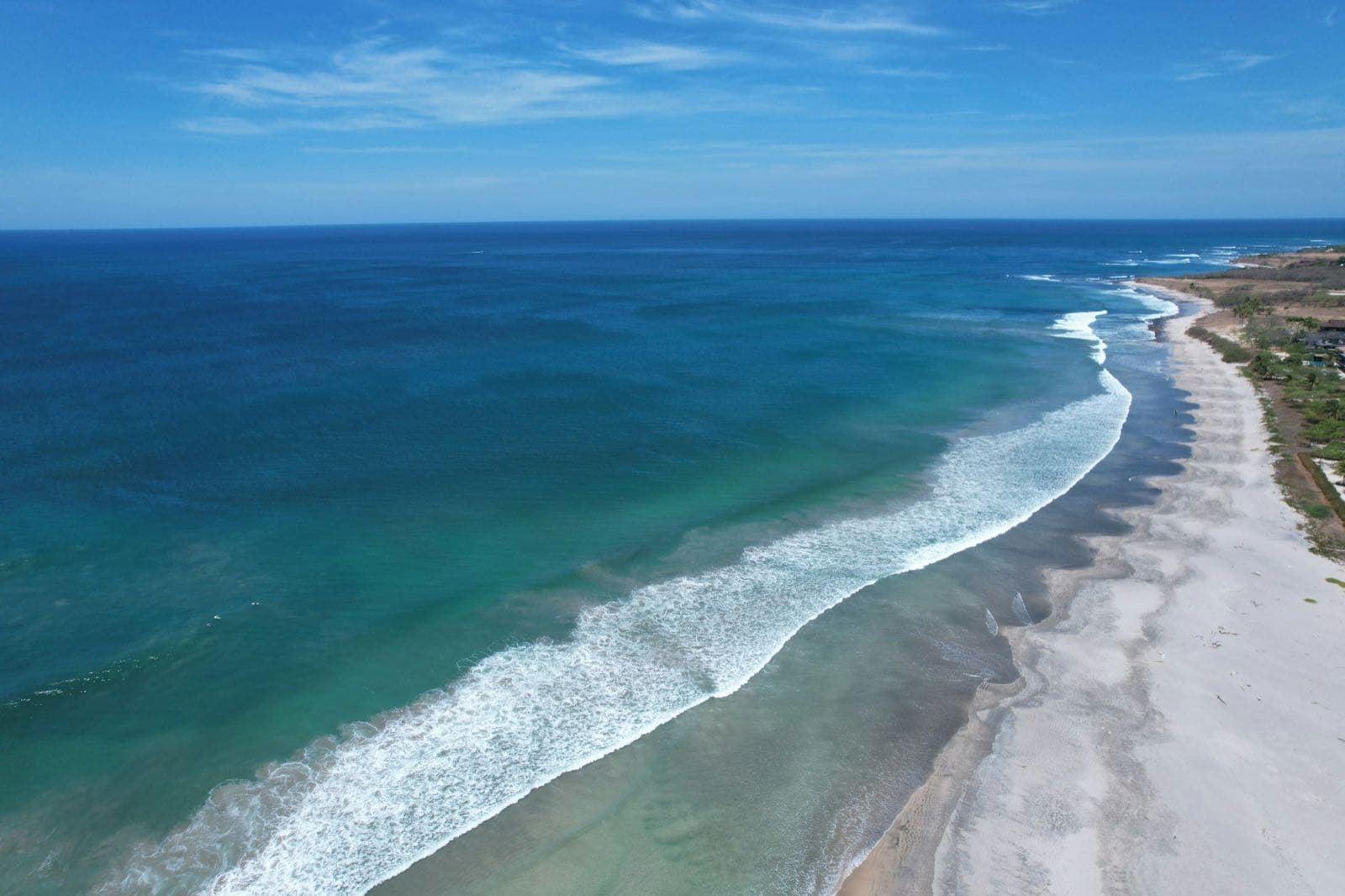
Tamarindo is the most-visited beach town in Costa Rica — a 3 km arc of soft sand on the Guanacaste coast with a year-round surf break, the country's best sunsets, and more restaurants per block than anywhere outside San José. It's also the most polarizing destination in our shuttle business. Some guests love the buzz; others want us to drive them to "the quiet beach next door" before they unpack.
Both reactions are valid, and they come from the same fact: Tamarindo town and Tamarindo beach are two different experiences. The town is busy, English-speaking, and packed with bars. The beach is enormous, golden, and you can still find an empty stretch of it by walking ten minutes south to Playa Langosta or driving five minutes north to Playa Grande. The trick is knowing which one you want before you book a hotel — and this guide will help you decide.
Where Tamarindo actually is (map and location)
Tamarindo sits on the Pacific coast of Guanacaste province, on the western side of the Nicoya Peninsula. If you look at a map of Costa Rica, it's roughly in the northwest corner — about 35 km southwest of Liberia and almost directly west of the Río Tempisque bridge. The town's coordinates are 10.30°N, 85.84°W, and it's part of the canton of Santa Cruz.
From a planning perspective, the only number that matters: it's about 1 hour 15 minutes from LIR (Liberia airport) and 5 hours from SJO (San José airport). That gap is why nearly every Tamarindo traveler flies into LIR if they can.
The town itself is small — you can walk from one end to the other in 15 minutes. Most hotels, restaurants, and surf schools cluster along the main beachfront road. Behind that, dirt streets head inland to quieter B&Bs and vacation rentals. The estuary at the north end separates Tamarindo from Playa Grande and the leatherback turtle reserve.
To visualize it: open Google Maps, search "Tamarindo Costa Rica", and you'll see the town hugging a long crescent of golden beach, with Playa Langosta to the south and the estuary + Playa Grande to the north. The closest major airport pin (LIR) sits to the northeast — that's your inbound landing point.
How to get to Tamarindo
We drive guests to Tamarindo from every major hub. Here's the honest breakdown:
From LIR (Liberia airport). The default option. About 1 hour 15 minutes door-to-door on paved roads through Filadelfia and Santa Cruz. Private LIR → Tamarindo shuttle is the no-stress version — your driver meets you with a sign, the car seat is already installed if you asked for one, and you're at your hotel before your phone finishes downloading the Costa Rica weather forecast.
From SJO (San José airport). A long day — 4.5 to 5 hours depending on traffic crossing the Río Tempisque bridge. Most guests who fly into SJO break the trip with a stop (more on that below). If you're going direct, SJO → Tamarindo is a comfortable private shuttle with one bathroom stop and Wi-Fi onboard.
From La Fortuna. Around 4 hours via Cañas. This is a popular combo: people do volcano first, then beach. La Fortuna → Tamarindo is one of our most-booked Pacific transfers.
From Monteverde. About 3.5 hours descending from the cloud forest to sea level via the new Cañas road. Monteverde → Tamarindo — most guests appreciate the silence after a few foggy mornings up in the mountains.
From Manuel Antonio. A long inland drive, about 5 hours, crossing the country from the South Pacific to the North Pacific. Manuel Antonio → Tamarindo — usually booked by guests who want to sample both coastlines in one trip.
The rental car alternative looks cheaper on paper, but most travelers don't actually want to drive 4–5 hours after an overnight flight, navigate Costa Rica's signage (which is sparse), and pay 2026 insurance prices on top.
And the way back. Every one of these runs in reverse at the same price — Tamarindo → LIR ($135, 1h15) is the one almost everybody needs, and Tamarindo → SJO ($345, 5 h) is the one to plan carefully around a morning flight. Book the departure at the same time as the arrival; it's the single most common thing guests forget.
Best time to visit Tamarindo
Guanacaste is the driest region in Costa Rica. The seasons matter a little less here than in the rainforests, but they still shape the trip.
Dry season (December–April). Wall-to-wall sunshine, brown landscapes inland, perfect beach weather, the busiest tourist months. December 26 to January 2 and Semana Santa (the week before Easter) are peak — book hotels and shuttles 3+ months out.
Green season (May–November). Brief afternoon rain, lush vegetation, fewer crowds, much better prices. May, June, and November are the sweet spot — warm mornings, occasional storms in the late afternoon, and you'll have stretches of the beach to yourself.
Surf-specific. Tamarindo gets year-round swell. April to October produces bigger Pacific swells (better for intermediate/advanced); November to March is gentler and more beginner-friendly.
Turtle nesting. Leatherback turtles nest at neighbouring Playa Grande inside Las Baulas National Park from late October through February. You can join a guided night tour from Tamarindo — small groups only, no flash photography.
How many days do you need in Tamarindo?
- 2 nights. Tight. Enough for a beach day, a sunset dinner, and one half-day excursion.
- 3 nights. The sweet spot for a beach-focused stay. Time for surf lessons, an estuary tour, and one big day trip (Rincón de la Vieja, Río Celeste, or a sailing charter).
- 5+ nights. Worth it if you want to slow down, take real surf lessons, and explore the nearby beaches (Playa Conchal, Playa Flamingo, Playa Avellanas, Playa Negra).
For combo trips, the classic 7–10 day Costa Rica itinerary is La Fortuna (2–3 nights) → Monteverde (2 nights) → Tamarindo (3 nights) → LIR. It ends at a different airport than it started, which feels inefficient but saves you a 5-hour drive back to SJO.
Where to stay in Tamarindo
Three zones, three different vacations:
Beachfront in the heart of town — for people who want to walk to dinner. Tamarindo Diria Beach Resort is the classic large all-inclusive option, right on the main beach with pools and restaurants. Hotel Jardín del Edén is a quieter mid-size resort tucked above the beach with great sunset views.
Quieter Playa Langosta (south end) — 5 minutes from town but worlds calmer. Capitán Suizo Beachfront Boutique Hotel is the old-money classic; mature trees, howler monkeys overhead, a beach that's a thousand times quieter than the main strip. Cala Luna Boutique Hotel and Sueño del Mar Beachfront Boutique B&B hit the same vibe at slightly different price points.
In-town, mid-range, walking distance — for travelers who want town energy without resort prices. Wyndham Tamarindo and Occidental Tamarindo cover the international-chain reliability angle. Ocho Artisan Bungalows is a smaller boutique stay popular with couples.
Surf-and-party budget — if you're 22 and want to be out until 2 a.m. WET Hotel, The Coast Beachfront Hotel, and Pacific Kalokairi Hotel are walking distance from the bars and considerably cheaper than the beachfront resorts.
What to do in Tamarindo
Surf. This is the headline activity. Tamarindo Beach has a sandy bottom and consistent waves year-round, which makes it one of the best beginner spots in the country. Group lesson around $40–55, private around $70–90. Iguana Surf School and Witch's Rock Surf Camp are the long-standing favourites. Intermediate surfers should rent a board and head to Playa Langosta at low tide or to Playa Avellanas ("Little Hawaii", 30 minutes south).
Tamarindo Estuary tour. The estuary that separates Tamarindo from Playa Grande is a mangrove ecosystem packed with white-faced monkeys, crocodiles, herons, and roseate spoonbills. Take a kayak tour with Tamarindo Estuary Tours early morning for the best wildlife.
Catamaran sunset sail. Tamarindo's signature half-day excursion. Four hours, snorkel stop, open bar, and a Pacific sunset on the water. Marlin del Rey and Blue Dolphin are the established operators. Around $90–110 per adult.
Las Baulas turtle tour (Oct–Feb only). Guided night walk on Playa Grande to (hopefully) see a leatherback turtle nest. Small groups, very strict rules, and not guaranteed — but if you witness it, unforgettable.
Diamante Eco Adventure Park. A 30-minute drive north, this is the most all-in-one adventure park in Guanacaste — zip-line, hanging bridges, animal sanctuary, beach club, and the longest superman zip-line in the country. Worth a full day if you have one to spare or you're travelling with kids.
Beach-hop the Gold Coast. Rent a 4x4 for a day and visit Playa Conchal (crushed-shell beach, calm water, snorkelling), Playa Flamingo (white sand, upscale), and Playa Brasilito (sleepy and cheap). You'll see why locals call this stretch the Gold Coast.
Where to eat in Tamarindo
Tamarindo has the best beach-town restaurant scene in Costa Rica — period. A short list of long-standing favourites:
- Pangas Beach Club — toes-in-sand dinner with the estuary as the backdrop. Date-night vibe.
- Patagonia del Mar — Argentine grill, great steaks, the best wine list in town.
- Nogui's — open since 1974, the oldest restaurant in Tamarindo, classic fresh seafood right on the beach.
- El Pescador — local ceviche, fish tacos, and Imperial draft beer at a fraction of the beachfront prices.
- Surf Shack — burgers, smoothies, late-night quesadillas. Always packed.
- La Bodega — best breakfast in town. Açaí bowls, real coffee, and a quiet patio.
For typical Costa Rican food (gallo pinto, casados), walk a block inland to any of the smaller sodas where locals eat — you'll pay a third of beachfront prices and get bigger portions.
Getting Around Tamarindo (Without a Rental Car)
Tamarindo town is walkable end-to-end in 15 minutes, and that's how most travelers get around once they're checked in. For everything else, here's the honest playbook:
- On foot. Hotels, restaurants, surf schools, bars, the ATM, the supermarket, the beach — everything is within a 10-block grid. You don't need a car for daily life in town.
- Tuk-tuks and local taxis. Red-and-yellow tuk-tuks loop the main road during the day; flag one down or ask the hotel to call. Typical ride within Tamarindo: $3–5. To Playa Langosta or Villa Real: $7–10. Cash only.
- Uber and Didi. Both work in Tamarindo, with caveats. Coverage is spotty; expect 5–10 minute waits and surge pricing at sunset and after midnight. Rides within town: $3–6. Useful at night when tuk-tuks slow down.
- Bikes and scooters. Several rental shops near the main beach rent beach cruisers ($10–15/day) and scooters ($35–50/day). Good for reaching Playa Langosta or Playa Grande, less good in the rainy season.
- Private shuttle for day trips. For trips to Brasilito, Conchal, Flamingo, Las Catalinas, Rincón de la Vieja, or onward to other parts of Costa Rica, we drive guests directly from their hotel. See drive times below.
You do not need a rental car if Tamarindo is your only base. Where rental cars start to make sense: if you're planning to chase a new beach every day for 5+ days (Avellanas, Negra, Junquillal, Playa Pelada in Nosara) and want flexibility. For one or two day trips, a private shuttle costs about the same as a rental day plus insurance and is much less stress.
Tamarindo to Nearby Beaches: Drive Times
The Guanacaste coast is studded with beach towns, and Tamarindo makes a good base for sampling them. Realistic 2026 drive times from Tamarindo town center:
| Destination | Drive time | Distance | Why go |
|---|---|---|---|
| Playa Grande | 10–15 min (or 2 min by water taxi) | 8 km via road | Quiet beach, leatherback turtle reserve |
| Playa Langosta | 5 min by car, 25 min walk | 2 km | Sister beach south of Tamarindo, calmer water |
| Playa Avellanas | 30–40 min | 17 km (dirt road last stretch) | Surf spot, Lola's beachfront restaurant |
| Playa Negra | 45–55 min | 25 km | Pro-level surf, very small village |
| Brasilito | 25–30 min | 20 km on paved road | Quiet local fishing town + boat to Conchal |
| Playa Conchal | 30 min by car + short walk | 22 km | Crushed-shell white-sand beach (one of CR's prettiest) |
| Flamingo | 35 min | 26 km | Upscale resorts, marina, sunset bar scene |
| Las Catalinas | 40 min | 28 km | Carfree pueblo, planned community feel |
| Playa Potrero | 40 min | 30 km | Long quiet beach, expat-heavy |
| Playa Hermosa (Guanacaste) | 1h 10min | 50 km | Family-friendly beach near Papagayo |
| Playas del Coco | 1h 10min | 52 km | Busiest north-Guanacaste beach town |
| Papagayo Peninsula | 1h 15min | 55 km | Four Seasons, Andaz, all-inclusives |
| Nosara (Playa Guiones) | 1h 30min | 60 km on partly-unpaved road | Boho-yoga-surf alternative to Tamarindo |
| Santa Teresa | 4h 30min (with ferry) | 200 km | Far-south Nicoya beach scene |
Special note on Tamarindo to Brasilito drive time: 25–30 minutes on paved roads. You head north out of Tamarindo on Route 155, pass through Villa Real and Huacas, then turn west toward Brasilito and Conchal. This is the most popular day-trip combo from Tamarindo — Brasilito for the morning local-fishing-town vibe, Conchal for the white-sand beach in the afternoon. We have private Tamarindo → Brasilito shuttles for guests who want to skip the rental.
Day trips from Tamarindo
If you have 4+ nights, the day-trip menu is excellent:
- Rincón de la Vieja National Park — active volcano, hot springs, hanging bridges. 2 hours away by private shuttle. Rincón de la Vieja → Tamarindo is one of our most-requested round-trips out of the beach.
- Río Celeste waterfall — the impossibly turquoise waterfall in the rainforest. 2.5 hours each way, so it's a long day, but the photos are unbeatable.
- Palo Verde National Park — a slow-boat wildlife cruise on the Tempisque River. Crocodiles, monkeys, and 300+ bird species. Great for families.
- Arenal Volcano (La Fortuna) overnight — if you started in Tamarindo and didn't see the volcano yet, a 2-night side trip is doable. Tamarindo → La Fortuna takes about 4 hours.
Practical info
Money. USD is accepted everywhere in Tamarindo (it's almost the unofficial currency). Most ATMs dispense both colones and dollars. Tip your servers 10% if not included; tipping the shuttle driver is appreciated.
Phones / Wi-Fi. All hotels have Wi-Fi. Cell coverage is solid in town, spotty on outlying beaches. Kolbi, Claro, and Liberty all sell tourist SIM cards at LIR airport.
Safety. Tamarindo is safe by Latin American beach-town standards, but petty theft does happen — never leave belongings on the beach when swimming, and use the hotel safe for passports. The current at the main beach can be strong; swim only between the surf school flags.
Drinking water. Tap water in Tamarindo is safe to drink but tastes mineral-heavy. Most travelers buy bottled. Refillable bottles are a good move — the better hotels have filtered-water stations.
Sunset. Sunset is the local religion. Locals walk to the beach around 5:15 p.m. year-round to watch it. Don't book a 5 p.m. dinner reservation your first day — you'd be eating with your back to the show.
Pro tips most guides won't tell you
- The "Tamarindo" road sign on Google Maps is misleading. GPS will sometimes route you through Santa Cruz and a sketchy dirt shortcut. Use Waze and trust the longer paved route via Filadelfia. Your driver will already know this.
- Skip the Aug–Oct downpours unless you're a surfer. September and October are the wettest months in Guanacaste — afternoon storms can be heavy. Surfers love it (best swells of the year); families with kids don't.
- Surfing the main beach at low tide is rocky. Time your lessons for mid-to-high tide. The school will know, but ask anyway.
- The leatherbacks are not guaranteed. Some nights, no turtles show up. Treat it as a beach-night-walk-with-a-guide and you'll go home happy either way.
- Playa Grande, 10 minutes by car or 2 minutes by water taxi, is the quietest beach within an hour of Tamarindo. No bars, no surf schools, no crowds. Just sand and pelicans.
Onward connections
Most travelers fly home from LIR after Tamarindo: Tamarindo → LIR takes the same 1h15 as the inbound. If you're connecting onward in Costa Rica, our most-booked outbound combos are:
- Tamarindo → La Fortuna — about 4 hours, volcano-and-hot-springs combo
- Tamarindo → Monteverde — about 3.5 hours, beach-to-cloud-forest classic
- Tamarindo → Manuel Antonio — about 5 hours, second beach + national park
- Tamarindo → SJO — the long airport day, about 5 hours
For travelers with extra time, Tamarindo → Santa Teresa (about 5 hours with ferry) is the boho-yoga-surf upgrade — quieter, hipper, and pricier than Tamarindo itself.
FAQ
Is Tamarindo too touristy? Depends what you mean. The main beach road is busy and English-speaking — closer to a small Florida beach town than to "authentic Costa Rica". But walk 10 minutes south to Playa Langosta or 5 minutes inland and you're back in a small Tico town. We'd say Tamarindo is the right choice for first-time visitors and surfers; second-time visitors often prefer Santa Teresa, Nosara, or Manuel Antonio.
Is Tamarindo safe? Yes, by beach-town standards. Use normal city common sense — don't leave bags unattended on the beach, walk in groups at night past midnight, use Uber or a hotel taxi after the bars.
Can you swim at Tamarindo Beach? Yes, but watch the current. Swim between the surf school flags. The estuary mouth at the north end has rip currents — avoid swimming there.
Should I fly into SJO or LIR for Tamarindo? LIR every time if your home airport has direct flights. The 1h15 transfer beats a 5-hour SJO drive after a redeye. If you have to fly into SJO, consider breaking the trip in La Fortuna for 2 nights — then continuing to Tamarindo is only 4 hours fresh in the morning instead of 5 hours exhausted at midnight.
Do I need a 4x4 in Tamarindo? No — paved roads all the way in. You'd want 4x4 only if you plan to beach-hop the more remote stretches (Playa Negra, Playa Junquillal). For 90% of guests we recommend skipping the rental car entirely and pre-booking private shuttles + the occasional day-trip transfer.
How long is the drive from Tamarindo to Brasilito? 25–30 minutes on paved roads via Villa Real and Huacas. About 20 km of road. Brasilito is the closest "local fishing village" feel to Tamarindo and the gateway to Playa Conchal, so it's a very common day-trip combo. We drive guests on this route most weeks during high season.
How do you get around Tamarindo without a car? Walking covers everything in town (it's a 15-minute town end-to-end). For trips inside town to Playa Langosta or Villa Real, tuk-tuks run all day for $3–10. Uber and Didi both work in Tamarindo. For day trips to nearby beaches (Conchal, Flamingo, Las Catalinas), book a private shuttle round-trip — it's cheaper than a rental car day plus insurance.
Where exactly is Tamarindo on a map of Costa Rica? Tamarindo is in the northwest corner of Costa Rica, on the Pacific coast of Guanacaste province, in the Nicoya Peninsula. Coordinates: 10.30°N, 85.84°W. It's about 35 km southwest of Liberia (LIR airport) and roughly 5 hours northwest of San José (SJO airport). On Google Maps, search "Tamarindo Costa Rica" and you'll see the town along a long crescent beach.
Is there a beach better than Tamarindo nearby? Depends what you want. Playa Conchal (30 min by car) has whiter sand and clearer water but no town. Playa Grande (10 min) is quieter and protects turtle nesting season (Oct–March). Playa Avellanas (35 min) is the serious-surfer pick. Playa Langosta (5 min) is Tamarindo's calm sister beach. None replace Tamarindo if you want town + nightlife + a long surf-friendly beach in one walkable spot.
Want help planning the route? We drive guests to Tamarindo from every corner of Costa Rica. Get an instant quote for door-to-door private transfers from LIR, SJO, La Fortuna, Monteverde, or anywhere else in the country — bilingual drivers, child seats free on request.